ASTMH Annual Meeting 2026
blogStudy Detects Avian Influenza Exposure in U.S. Dairy Workers Not Previously Documented by Public Health Authorities
By: Matthew Davis, Burness
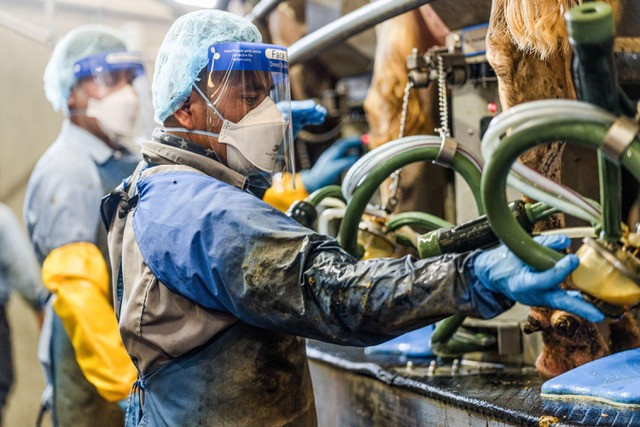
Evidence seen as indicative of broader neglect of farm worker health
As avian influenza continues to spread in U.S. cattle herds—and a fatal human case was reported earlier this month in Washington state—a study discussed Thursday at #TropMed26 found that 4% of workers tested in 2025 on 26 dairy farms in New Mexico, Colorado and California had antibodies to the virus in their blood, evidence they had previously experienced an infection.
Rebecca Fischer, an epidemiologist and infectious disease expert at Texas A&M University who worked in collaboration with colleagues from the U.S. Centers for Disease Control and Prevention and the University of Wisconsin, said that none of the human cases had been documented by public health authorities. They were detected after researchers conducted blood tests on 625 workers at farms that had previously experienced known or suspected cases in their cattle.
She said the tests identified 25 workers who were seropositive, meaning H5N1 antibodies were found in their blood samples— an indication of prior exposure. There were no active cases detected.
“We were sampling more than a year" after reported cattle cases, she said. “So, considering antibody waning, we expect that 4% is more likely a floor rather than a ceiling.”
Fischer said that the likely undercounting of H5N1 cases is indicative of the broader neglect of agricultural workers and the barriers they face in accessing healthcare. She noted that in the U.S., farm worker incomes are often below poverty level. Also, she said the majority of workers are immigrants who face language barriers and harbor fears of interacting with government authorities.
Fischer recounted a particularly telling experience: One of the workers participating in the study tested positive for an active influenza A inflection. And while researchers eventually ruled out H5N1, Fischer said it was not immediately clear what type of influenza was involved. Researchers recommended that the worker receive additional clinical care and testing, yet he was simply sent home.
“So, this is a high-risk vulnerable worker who was sent home without access to testing or treatment,” she said. “Nobody got contact traced and nobody got to interview the worker about risk factors.”
Fischer also said that despite the growing risk of H5N1 spillover from cattle into humans, only half of the workers in the study reported receiving personal protective equipment (PPE) from their employers; all of them reported purchasing some of their own PPE equipment; and only 4% were using the full complement of protective gear recommended by the CDC.
“Most people were using gloves, but eye protection—safety goggles—were only worn by about a third,” she said, even though the eyes are known to be a potential route of infection. “More people were using their own glasses or sunglasses as their eye protection. And we actually saw more people using bandanas or gaiters as their respiratory protection.”
Fischer said that the reality today is that in the U.S., people who have intense contact with animals in situations where there is a high risk of zoonotic transmission of dangerous diseases are not getting anywhere near the level of attention they deserve. And among the many problems that creates, she said, is that many human exposures to avian influenza are unlikely to be captured by existing public health surveillance systems.
*Photo courtesy of California Department of Public Health
Related Posts
By: Matthew Davis, Burness