ASTMH Annual Meeting 2026
blogHow to Ensure Africans Benefit from Fruits of Medical Innovation: Put Africans in Charge and Embrace Regulators as Allies, Not Obstacles
By: Matthew Davis, Burness
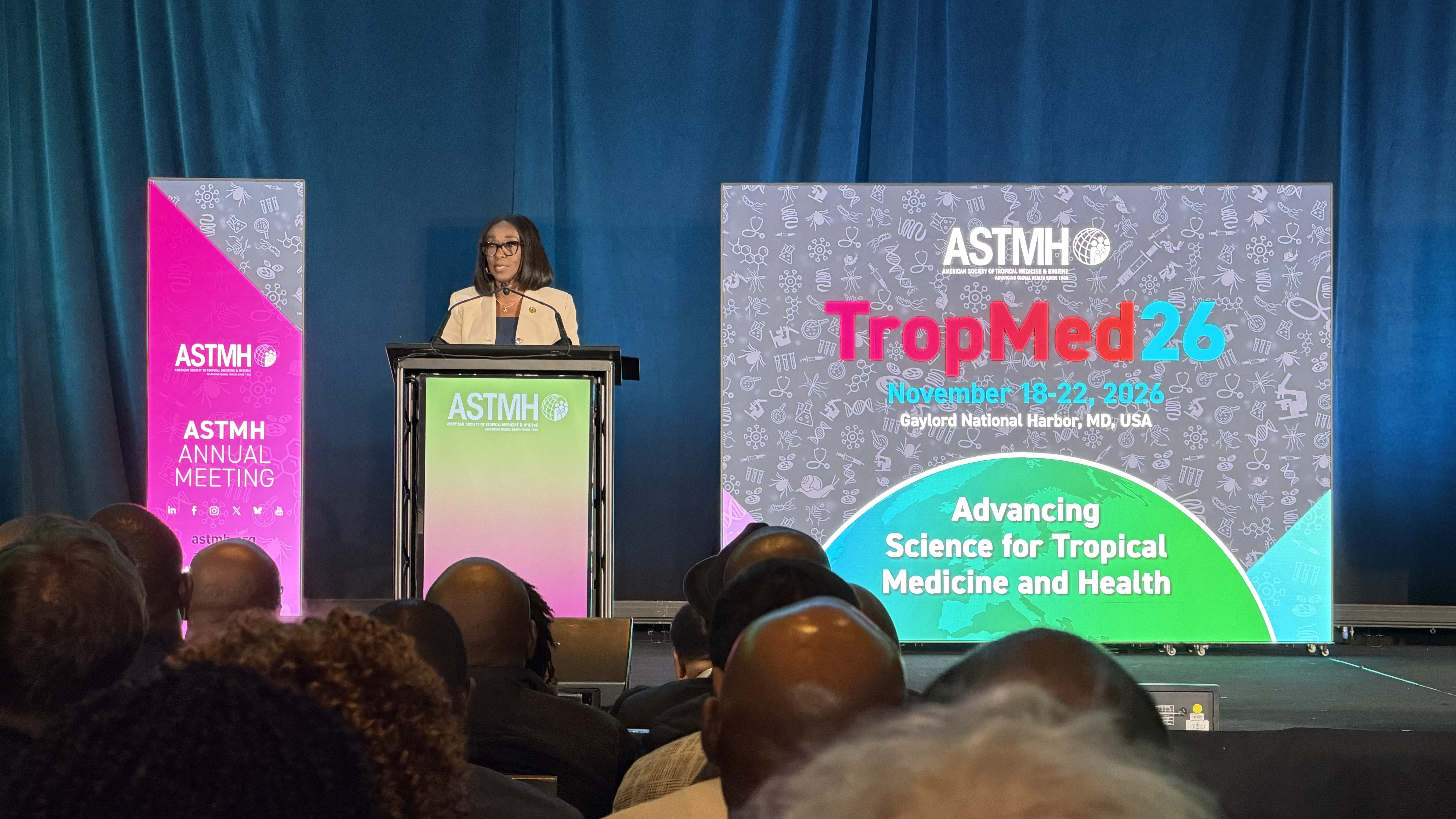
H.E. Dr. Delese Mimi Amoakoa Darko, PhD, the director general of the African Medicines Agency (AMA), opened #TropMed2026 with a focus on two things she believes can greatly accelerate efforts to translate medical discoveries into products that will reduce the burden of disease in sub-Saharan Africa: 1) Ensure African scientists, researchers an communities are leading the work, and 2) embrace regulators as colleagues and collaborators who should be consulted early in the product development process.
Dr. Darko noted that it is especially important to ensure that Africans are the prominent voice in medical research intended to benefit African patients.
“African scientists have made discoveries, research centers have conducted major trials, and African communities have helped generate evidence that benefits the world,” Darko said. “But the question I want to ask is, how often are these institutions involved when the research question is first framed? How often does the African researcher lead rather than join major decisions after they have been made?”
Similarly, she said that communities should be shaping the work long before they are being recruited to join clinical trials.
Dr. Darko said the persistent lack of African scientific leadership and community consultation means that problems that could be addressed in the early stages of product development all too frequently emerge only after a new drug or vaccine is well advanced in the pipeline.
For example, she said there were COVID vaccines that could not be used in Africa because they had to be stored at especially low temperatures. She recounted reviewing a Phase 3 clinical trial in Ghana for a tablet intended for infants with instructions to dissolve it in apple juice—even though apple juice was not available in local communities. Darko also noted a case where researchers were planning to test a drug in an African population seemingly unaware that many potential volunteers carried a genetic trait that could have caused dangerous interactions.
Viewing Regulators as Allies Rather Than Roadblocks
Dr. Darko said another way to smooth the pathway from bench to bedside is to approach regulators as allies, not as “roadblocks.” She acknowledged that regulatory requirements can be challenging. But she said some of the friction in the regulatory process can be eliminated by engaging reviewers before a protocol is finished.
“An earlier discussion can reveal that a critical study population is missing, or that an endpoint may not answer the question, or that a diagnostic may not perform reliably in the clinic where it is needed,” she said. “It is better to discover that while the trial and the endpoints can still be improved, rather than after years of work.”
She said the African Medicines Agency is trying to do its part by creating a Regulatory Innovation and Manufacturing Readiness Hub to provide “what we call our front door, for researchers and developers seeking scientific advice on a clinical trial design.” She said the agency already has worked with an Egyptian company to facilitate efforts to test and manufacture a vaccine that could be used to fight the ongoing Ebola disease outbreak caused by the Bundibugyo virus.
Dr. Darko said that ultimately, all involved in global health research should constantly focus on four essential questions: “Who decides what should be studied? Does the evidence reflect the people who will use the intervention? Have we engaged regulators early enough? And have we planned for patients to receive the product?” All must be kept top of mind, she said, to ensure medical innovations lead to real-world impacts.
“A discovery is not a cure until it reaches a patient,” she said. “Until then, it's just a headline.”
Related Posts
By: Matthew Davis, Burness
By: Jamie Bay Nishi, Ceo of Astmh